

Screen & Sound · The Lori Diaries
When I first watched The Devil Wears Prada, I was firmly on Andy Sachs's side. She was young, ambitious, trying to make something of herself in New York, and working for a woman who seemed determined to make every day unnecessarily difficult. Miranda Priestly was the villain. Simple. Sixteen years after the film came out, I'm watching it again at 27, with some experience of working life behind me, and I'm surprised by how differently I see her. I understand Miranda now. That doesn't mean I'd ever want her to be my boss.
There are films I rewatch because they make me happy, and films I rewatch because I know every line and find that comforting. Then there are films that seem to change a little depending on how old I am when I watch them.
The Devil Wears Prada has become one of those for me.
The clothes are still wonderful. I still love the New York setting, the office at Runway, and the way Meryl Streep can make a whole room uncomfortable without raising her voice.
But the older I get, the less interested I am in deciding which woman is the good one and which is the bad one.
As a teenager, I saw Anne Hathaway's Andy as someone who needed to escape a terrible boss to become herself again. Miranda was simply the obstacle in her way.
Now, having experienced the difference between wanting a career and actually having a job, I find myself noticing things I missed before.
The pressure. The expectations. The compromises people make because they're afraid of losing an opportunity. And the strange way we can admire someone's success while feeling deeply uncomfortable with what it takes to maintain it.
I also find myself wondering whether I was a little too quick to dismiss Miranda.
Not because sending your assistant on an impossible hunt for an unpublished Harry Potter manuscript suddenly seems reasonable. It doesn't.
But because there's more to her than that.
Miranda Is Excellent at Her Job. That's What Makes Her So Complicated.
The first time we meet Miranda, we see her through the reactions of everyone around her. People panic. Clothes are changed. Desks are tidied. The entire office seems to rearrange itself before she even walks through the door.
It's funny, of course. It's also an immediate warning about what working for her is going to be like.
Miranda expects an extraordinary amount from the people around her, and she rarely seems interested in whether those expectations are reasonable.
But she isn't someone who has stumbled into an important job because she knows the right people and owns a very good collection of coats.
She knows the industry. She knows the designers. She understands the decisions that shape the magazine, and she has spent years building the relationships and influence that keep it relevant.
I love the scene where Andy makes a dismissive comment about two belts looking almost identical, and Miranda calmly explains how a particular shade of blue travelled through the fashion industry before reaching the clothes Andy considers completely unrelated to it.
It's a wonderfully sharp reminder that Andy has entered a world she doesn't yet understand.
I used to watch that scene and think Miranda was humiliating her for no reason.
Now I can see something else in it, too: a woman who has spent decades becoming an expert in her field and has very little patience for someone who assumes the work is silly because she doesn't understand it.
I don't think Miranda needs to be cruel to make that point. But I do think she has a point.
Andy wants the doors that a job at Runway might open for her. She just doesn't initially respect the work being done on the other side of those doors.
I find that harder to ignore at 27 than I did when I was younger.

Understanding a Difficult Woman Isn't the Same as Excusing a Difficult Boss
Here's where my sympathy for Miranda has to stop for a moment.
Wanting people to take their work seriously is one thing. Expecting them to surrender their entire lives to prove it is another.
Miranda calls whenever she wants. She demands impossible things and treats successful delivery as the bare minimum. Andy is expected to arrange her personal life around whatever might happen at the office next.
There is no amount of professional brilliance that makes those expectations healthy.
When I was younger, I think I imagined a dream job as something so exciting that I wouldn't mind giving it everything.
Now I know that even a job you love can become exhausting when it never leaves you alone.
I want to work hard. I want to be good at what I do. I want to learn from people who know more than I do.
I also want to have dinner without wondering whether my phone is about to turn the evening into another emergency.
And that brings me to Nate.
When I first watched the film, I understood his frustration with Andy. She's absent, distracted, and increasingly unavailable. Their relationship is clearly suffering.
Watching it now, I think he's entitled to feel hurt. I just wish he and Andy's friends showed a little more curiosity about why she's working so hard in the first place.
She's trying to get somewhere. The job may not be her dream, but she believes it can help her reach one.
I'd like to think the people who love me would tell me if I was losing myself in my work. I'd also like them to recognise that an ambitious period of my life doesn't automatically mean I've become a different person.
I don't think Nate is wrong to want a partner who has time for him. I don't think Andy is wrong to want a career.
The problem is that her job keeps forcing those two things into competition.
I can admire Miranda's standards without wanting her management style, and I can support Andy's ambition without pretending that being permanently available is the price everyone should pay for success.
The Paris Scene That Changes Everything for Me
Paris is where the film becomes much more interesting than a story about a young woman and her nightmare boss.
Miranda's marriage is falling apart. She is worried about what the divorce will mean for her daughters, and for a moment we see her without the perfect professional exterior she wears to work.
I remember being struck by how uncomfortable Andy seems when Miranda lets her see that side of her.
I understand the discomfort. When someone is powerful, distant, and almost impossible to please, it's easier to think of them as a role rather than a person.
Then suddenly Miranda is sitting there with a problem that cannot be fixed by an assistant, a designer, or the next issue of a magazine.
She is still formidable. She is also a woman whose private life is coming apart.
It doesn't erase the way she treats Andy. It does make her harder to reduce to a joke about a terrible boss.
And in Paris, there's another threat. People are manoeuvring to replace Miranda at Runway.
That part hits differently now, too.
Miranda has built an entire professional life around being exceptionally good at what she does, yet she is still vulnerable to people deciding that someone newer, younger, or less expensive might be a more attractive choice.
A woman at the top can be praised for her achievements and still be treated as replaceable.
I don't know every battle Miranda fought to reach her position. The film is Andy's story, after all, and we see very little of Miranda's life before she became Miranda Priestly.
But I understand why she fights to stay there.
What I struggle with is what she chooses to do in order to survive.
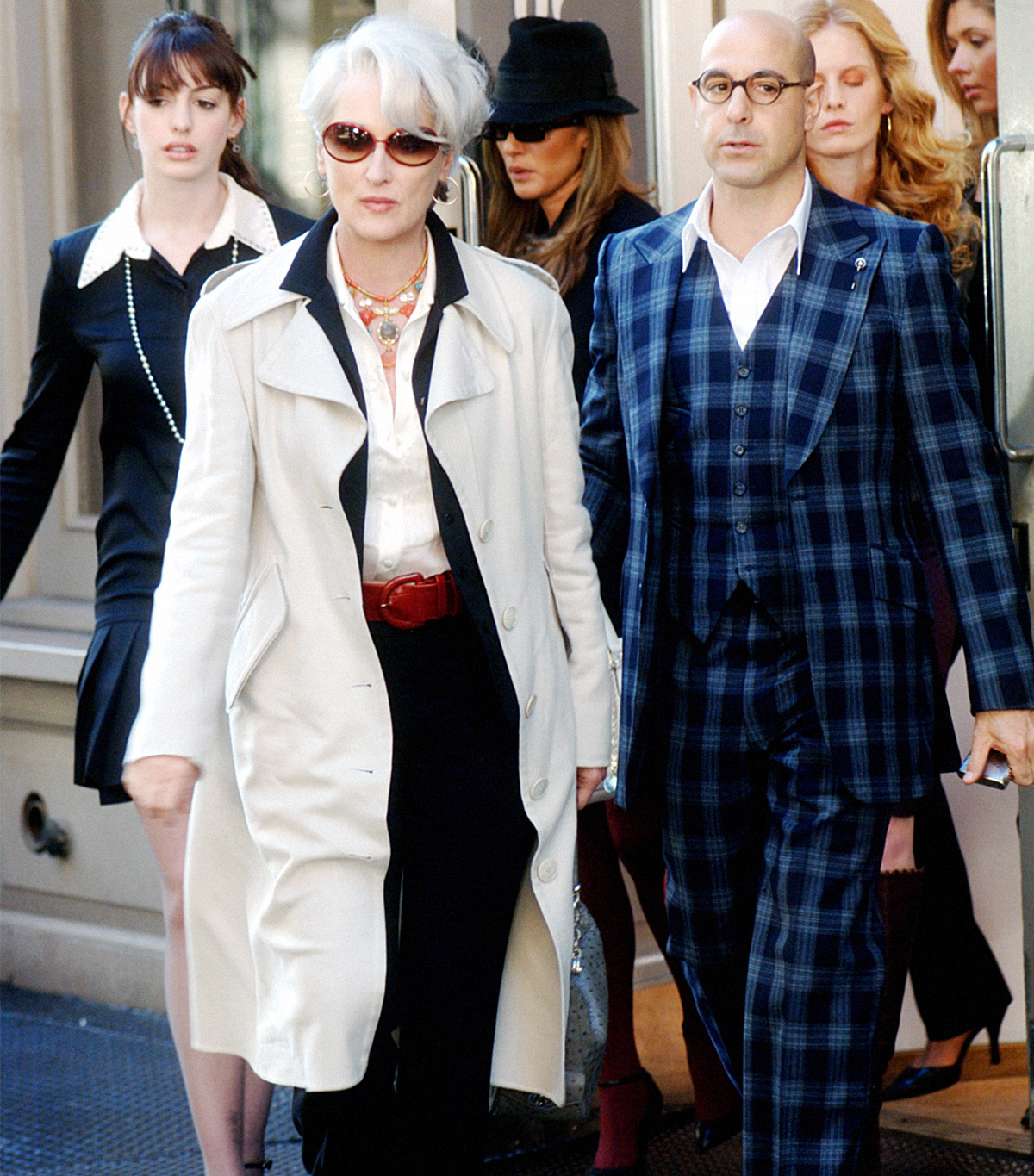
Poor Nigel. Really, Poor Nigel.
Of all the things that happen in the film, Nigel losing his chance to become creative director for James Holt is the moment that makes it impossible for me to defend Miranda completely.
Nigel has been loyal to her for years. He knows the fashion world, understands how Runway works, and spends much of the film helping Andy find her feet.
When a wonderful opportunity finally comes his way, it feels as though all that work might lead to something that's his.
Then Miranda gives the position to Jacqueline Follet, the woman being considered as her replacement, and protects her own job in the process.
From a business perspective, I understand the manoeuvre. Miranda sees a threat, finds a way around it, and keeps the role she has spent years building.
From Nigel's perspective, it's devastating.
He's expected to accept the loss, remain loyal, and trust that Miranda will make it up to him one day.
That's a painful thing to ask of someone who has already given so much.
It's also the moment that makes me question the kind of success Miranda represents.
If your career depends on being close to one powerful person, what happens when your opportunity conflicts with theirs?
Nigel has the experience, the talent, and the relationships. Yet he still has to wait for Miranda to decide when his moment can happen.
I can understand Miranda's decision without thinking it was fair to him.
And I think Andy can, too. That's why what happens next matters.
Andy Isn't Rejecting Ambition. She's Choosing What Kind of Ambition She Wants.
When Miranda tells Andy that she sees something of herself in her, I no longer hear it as a simple compliment or a warning.
It's both.
Andy has learned how to anticipate problems, work under pressure, and become good at a job she once dismissed. She has also taken Emily's place on the Paris trip, knowing how much it meant to her.
Miranda recognises that Andy has started making difficult choices to move forward.
But watching Nigel lose his opportunity shows Andy what those choices could look like on a much larger scale.
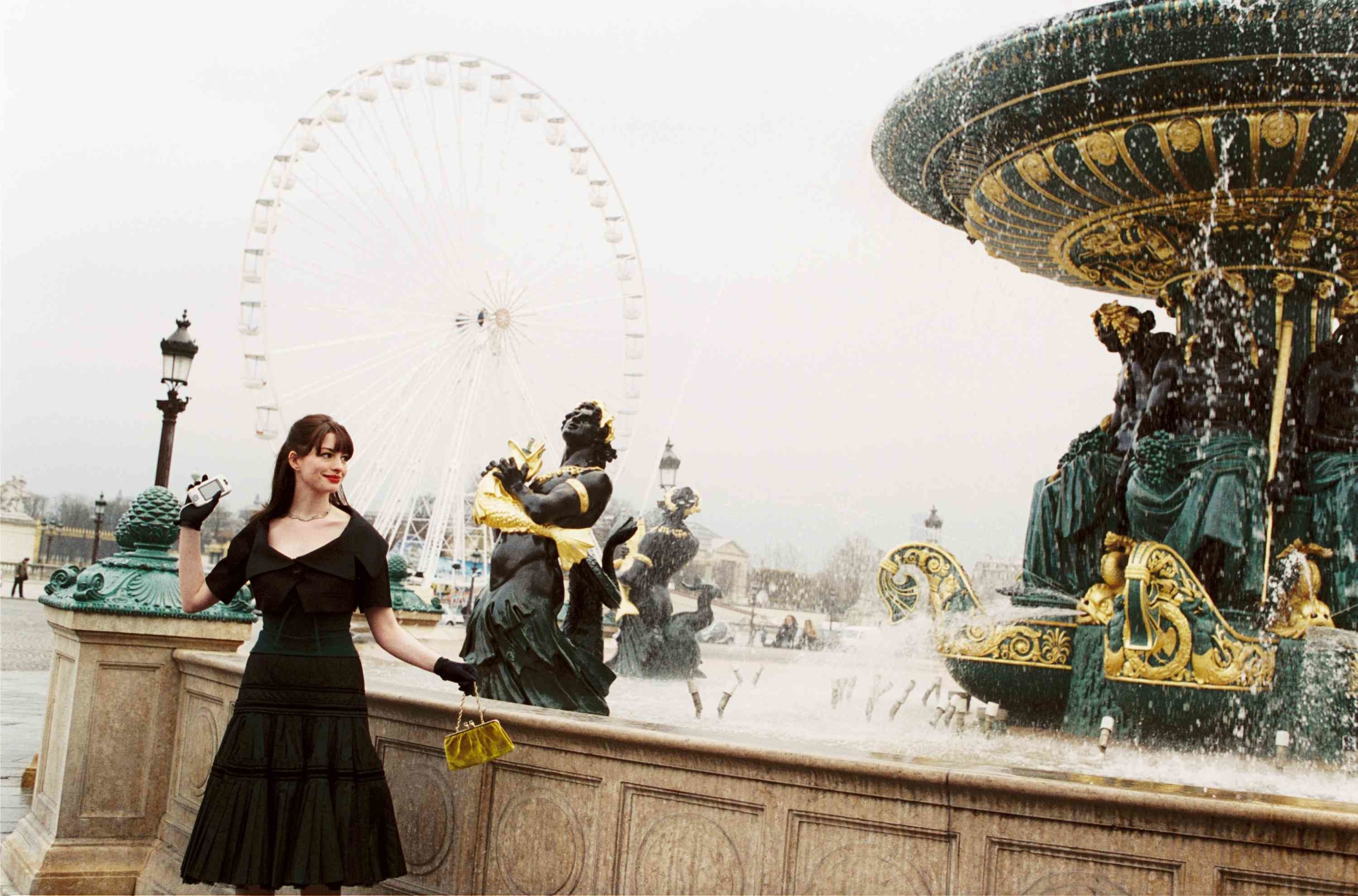
I used to think throwing her phone into the Paris fountain was mostly about escaping Miranda.
Now I see it as Andy deciding that she doesn't want every future decision to be made by the rules of that office.
She isn't saying she no longer wants to succeed.
She still wants to be a journalist. She still wants a career. She simply realises that Runway isn't the only place where her ambition can exist.
There's something reassuring about that when you're in your twenties and still working out which opportunities are worth chasing.
Leaving a prestigious job doesn't automatically mean you weren't capable of doing it. Sometimes it means you've learned enough to know that you want to do something else.
And perhaps the most interesting part of the film is that Miranda seems to understand Andy's decision more than she lets on.
That Recommendation Letter Still Gets Me
By the end of the film, Andy interviews for a job at a newspaper. She has left Runway, returned to the career she originally wanted, and is trying to make a new start.
Then she discovers that Miranda has given her a recommendation.
Naturally, Miranda doesn't do it in the warm, straightforward way that most of us might appreciate.
Her message is that Andy was a tremendous disappointment as an assistant, but the newspaper would be foolish not to hire her.
I love that the recommendation sounds unmistakably like Miranda.
She doesn't suddenly become gentle or sentimental. She doesn't apologise, and the film doesn't ask us to pretend that everything she did was fine.
But she recognises Andy's ability.
The ending also reminds me that Andy's time at Runway wasn't pointless just because she chose to leave. She gained skills, experience, and a professional connection that helps her take her next step.
That connection matters, but it isn't the whole story. Andy still has to interview, write, and prove that she belongs in the newsroom.
I like that more than the idea that she simply escapes fashion and is rewarded with a perfect new life.
She takes what she learned with her, including the things she never wants to repeat.
And when Miranda smiles to herself after seeing Andy on the street, I choose to read it as a small moment of mutual recognition.
Neither woman has to become the other for that moment to mean something.
I don't watch The Devil Wears Prada at 27 and think Miranda Priestly is suddenly the hero.
I think she's more interesting than that.
She's talented, ambitious, protective of the career she's built, and capable of recognising those same qualities in someone younger. She's also demanding to the point of cruelty, and her success sometimes comes at a cost paid by people who trust her.
Andy isn't perfect, either. She's dismissive of a world she doesn't understand, then becomes so determined to prove herself that she almost loses sight of what she wanted in the first place.
At this age, I have more sympathy for both of them.
I want the confidence to take my work seriously, the courage to pursue opportunities, and the sense to recognise when the price of an opportunity has become too high.
So yes, I understand Miranda now. I admire how much she knows. I still wouldn't want her calling me in the middle of dinner. And I think Andy was right to decide that success could look different for her.
Have you rewatched The Devil Wears Prada as an adult? I'm curious whether you still see Miranda and Andy the same way you did the first time, or whether working life has changed your opinion, too.
Watch the Trailer
xoxo,
Lori
Post a Comment